
The electrical contractors in Sarasota who work in Bradenton spend their days inside block-and-stucco homes built in the fifties and sixties, houses where the panel was sized for window units and a handful of appliances, not central air and two refrigerators. A breaker that trips when the kitchen runs two things at once, or an outlet warm to the touch near the stove, are the kinds of problems that send homeowners here looking for professional outlet repair before something gets worse.
Because the construction of these homes shapes every part of the job, homeowners in Bradenton call local electricians who already know what is behind the walls rather than starting from scratch.
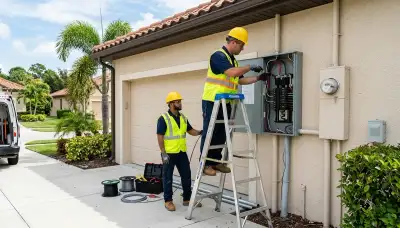
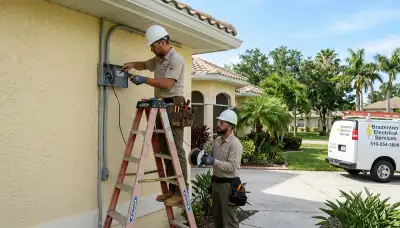
Knowing Bradenton Homes Changes How the Work Gets Done
A local electrician working in Bradenton knows these houses sit on slab-on-grade foundations with panels mounted in a garage or utility closet, and that running a new circuit means working through block walls rather than dropping through an open basement.
The work these homes most often need falls into two categories: panels that have run out of room and circuits that were never separated the way modern kitchens and bathrooms require. Homeowners in nearby Palmetto, FL residential electricians serve deal with similar construction, though the specifics shift house to house. Getting a problem inspected early keeps a small fix from becoming a wall-opening job.
Electrical Work Matched to How Bradenton Homes Are Built
An approach that works in a wood-frame house with a basement does not translate to a slab home with block walls. When the panel is on an exterior wall and every new circuit has to travel through concrete block, the job takes longer and costs more if the electrician did not plan for it.
Slab homes here need circuits routed through finished walls or across attic space, which adds time to any job that looks simple on paper. Block-and-stucco construction with a garage panel is common, and running outdoor circuits to a detached workshop or pool equipment pad means long conduit runs across a tight lot. Expert ceiling fan installation in a room with no existing ceiling box, for example, requires an attic run that a different house type would handle in minutes.
Four services fit these homes closely: quality electrical panel upgrade for panels that have no room left, specialist GFCI circuit work near every sink and outdoor outlet, reliable generator installation for homes that carry modern medical or refrigeration loads, and professional smoke detector installation in houses where the original detection was never updated.
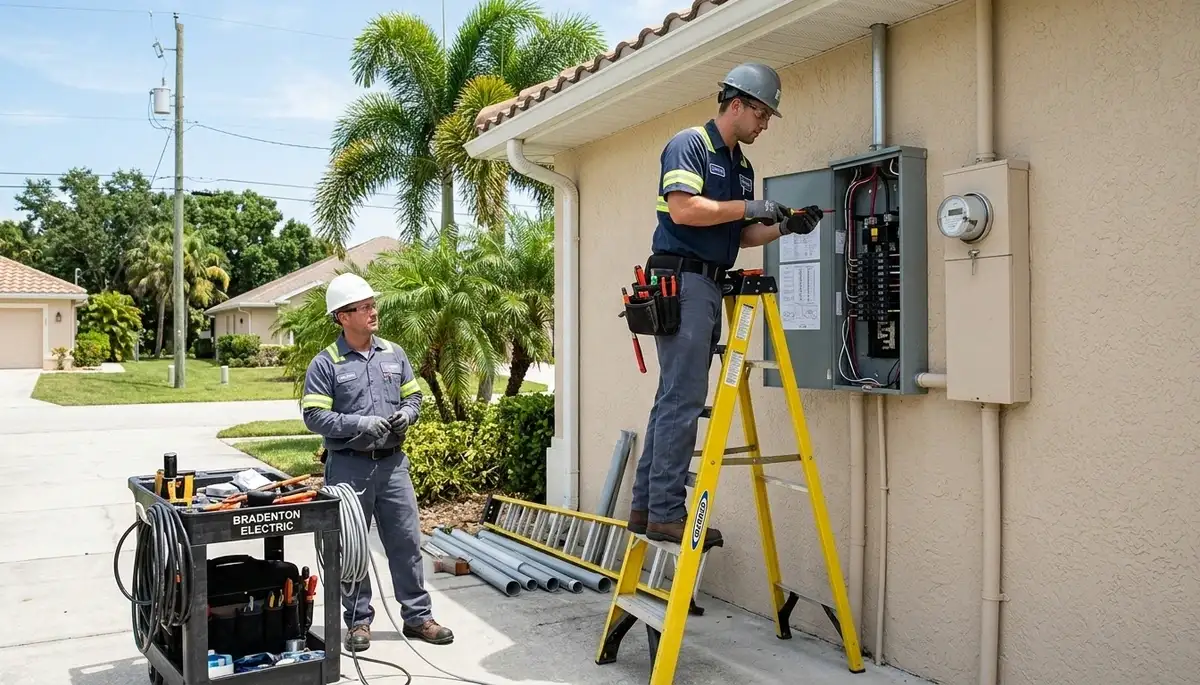
What the Age of Bradenton Homes Still Decides Today
Most of the houses in Bradenton went up in the fifties and sixties, a period when builders wired homes for sixty to one hundred amps, installed two-prong outlets throughout, and left no provision for grounding. Three things follow from that era and still shape the electrical work needed now: the panel is almost certainly undersized for today's load, the outlets in older rooms lack a ground, and any aluminum wiring installed in the late sixties is approaching the point where its connections need attention.
Breakers That Trip and Won't Reset
When the kitchen trips a breaker every time the microwave and the toaster run together, the panel is telling the homeowner it was never sized for how that room works now. A sixty-amp service built for a smaller load has no spare capacity once central air was added, and resetting the breaker does not fix the underlying problem - it just delays it until something fails under load.
Local electricians correct this by replacing the panel and bringing the service up to a capacity that matches what the house actually runs. Homeowners in Ellenton, FL electrical contractor territory face the same panel-capacity issue in homes of this age, and the fix is the same: more capacity, properly distributed across dedicated circuits.
Two-Prong Outlets in Every Room
Two-prong outlets mean the circuit has no ground path, and plugging a three-prong adapter into one does not add grounding - it just changes the shape of the opening. Computers, televisions, and appliances that expect a ground path can be damaged by voltage spikes that a grounded outlet would have sent safely away. Left alone, ungrounded circuits raise the risk of damage to equipment and, in older wiring, to the insulation itself.
Replacing two-prong outlets with grounded ones or with outlets that carry test and reset buttons brings each location up to what modern loads require. The homeowner gets outlets that accept three-prong plugs without adapters and a circuit that handles voltage events without passing them into the equipment.
Connections That Run Hot
An outlet warm to the touch or lights that flicker when a large appliance starts are signs that a connection somewhere in the circuit is not holding the way it should. In homes from the late sixties and early seventies, aluminum wiring was used for branch circuits, and aluminum expands and contracts more than copper at every connection point. Over decades, those connections work loose, and a loose connection under load generates heat.
Addressing aluminum wiring connections means inspecting every device on the circuit and either replacing the devices with ones rated for aluminum or installing copper pigtails at each connection. Both approaches stop the heat buildup and bring the circuit back to a condition where it carries its load without degrading further.
A Service That Was Never Sized for What Got Added
A pool pump, a car charger, and a new air conditioning unit added to a home that left the factory with a hundred-amp panel will push that service past what it can reliably carry. On a hot afternoon when the air conditioning is running and the car charger is drawing its full load, the panel has nothing left, and the homeowner learns it from a tripped main breaker. The panel was never sized for what the house became.
Adding capacity means replacing the panel and service entrance with one sized for the actual load the house carries, then separating the high-draw circuits so each one has the room it needs. Once that work is done, the homeowner can run the car charger, the pool pump, and the air conditioning without watching the breaker box.
Slab Construction and the Work It Complicates
When a house sits on a slab and the walls are concrete block, running a new circuit from one room to another means going up through the attic or cutting into finished surfaces. There is no basement to drop into and no crawlspace to snake wire through, so every new run adds time and planning that a different construction type would not require.
Local electricians who know these homes plan the route before opening anything, using the attic space where it is accessible and keeping wall cuts to a minimum. The goal is to get the new circuit where it needs to go without leaving the homeowner with a wall that looks like a job site when the work is finished.
Call (941) 200-1818 to arrange a no-pressure visit from a local electrician who can look at what the house actually has and tell the homeowner what it needs - no obligation, just a straight answer.
On Call Electrical delivers work built to last in Bradenton homes.

Complete Electrical Services Available in Bradenton, FL
The services below cover the full range of residential electrical work available to homeowners in Bradenton, FL. Find the one that matches what the house needs and reach out to get it handled.
Urgent Electrical Repairs Serving Bradenton, FL
- Electrical Repair - A breaker that will not reset, an outlet that stopped working, or a switch that sparks when flipped needs attention before the problem grows.
- Outlet Repair - Outlets that feel warm, fail to hold a plug, or show scorch marks around the face are telling the homeowner something is wrong behind the wall.
- Switch Repair - A switch that buzzes, flickers, or requires several tries to respond is a connection problem, not a minor inconvenience.
- GFCI Circuits - Kitchens, bathrooms, and outdoor locations in these homes need outlets with test and reset buttons to protect against shock near water.
- Home Electrical Inspections - An inspection finds what the homeowner cannot see: wiring that has degraded, panels that are overloaded, and circuits that were never properly grounded.
If something in the house is behaving strangely, getting it looked at now costs far less than waiting until it fails.
Panel, Capacity, and Wiring Work in Bradenton, FL
- Electrical Panel Upgrade - Homes built for sixty or one hundred amps need a panel that matches what the house actually runs today, with room for what gets added next.
- Electrical Panel Installation - A panel that is corroded, undersized, or full with no open slots needs replacement, not another workaround.
- Electrical Service - The connection between the utility and the panel sets the ceiling for everything in the house; a service sized for a smaller era limits every circuit downstream.
- Electrical Wiring - Wiring that has cracked insulation, improper splices, or aluminum connections that have worked loose needs to be corrected before it becomes a hazard.
- New Construction Wiring - Additions and detached structures added to these properties need wiring that meets current requirements and connects properly to the existing service.
Homes built in the fifties and sixties were wired for a load that looks nothing like what the average household runs now; bringing the panel and wiring up to that load is what keeps the house safe and functional.
Safety and Protection Services in Bradenton, FL
- Smoke Detector Installation - Detectors placed in the right locations and wired to the panel give the homeowner time to act; battery-only units in older homes often go untested for years.
- Fire Alarm Installation - A whole-home fire alarm system tied to the panel covers every part of the house, including garages and detached structures that a single hallway detector cannot reach.
- Lightning Surge Protection - A surge at the panel can travel to every device in the house in the same instant; protection at the panel stops it before it reaches the equipment.
- Whole Home Surge Protection - Homes with pools, car chargers, and multiple appliances carry enough equipment to make a single unprotected surge expensive.
- Home Energy Audit - An audit identifies circuits that are drawing more than they should, connections that are running hot, and equipment that is costing more to run than it needs to.
Getting grounding, detection, and surge protection right in a home of this age removes the risks that come with wiring that was installed before those protections were required - and gives the homeowner a clear picture of what the house is actually doing.
Lighting, Outdoor, and Added-Load Work in Bradenton, FL
- Electric Car Charger Installation - A dedicated circuit sized for a car charger keeps the charger from competing with the rest of the house and prevents the panel from tripping under the combined load.
- Pool Pumps - Pool equipment on a slab home often sits at the end of a long outdoor run; that run needs proper wiring, weatherproof connections, and a circuit sized for the motor.
- Landscape Lighting - Low-voltage landscape lighting tied to a dedicated circuit protects the transformer and keeps the outdoor load from pulling on interior circuits.
- Recessed Lighting Installation - Recessed lighting in a block-and-stucco home requires attic access and careful planning to keep the run clean and the ceiling intact.
- Generator Installation - A standby generator wired to the panel with a proper transfer switch keeps the house running when the power goes out, without backfeeding the line.
These homes are being asked to carry loads their original wiring was never designed for; matching the circuits and the panel to what the house actually runs today is what makes the difference between a system that holds and one that fails at the worst time.